Running a transportation or logistics business today is rarely simple. Fuel costs rise unexpectedly and traffic delays disrupt delivery schedules. Small operational issues often become serious financial problems.
Consider a logistics company managing hundreds of deliveries daily. Drivers lose hours in congestion or poorly optimized routes. Unexpected vehicle breakdowns disrupt carefully planned delivery schedules.
As operations expand, managing these challenges becomes increasingly difficult. Traditional planning tools cannot handle growing transportation complexity.
This is why AI in transportation is gaining serious attention. Artificial intelligence analyzes traffic patterns and delivery data instantly. Businesses can optimize routes and prevent unexpected vehicle failures.
For transportation entrepreneurs, AI is becoming a practical operational tool. It helps businesses build smarter and more efficient mobility systems.
What is AI in Transportation and Why Is It Gaining Global Attention?
AI in transportation uses intelligent technologies to improve mobility systems. These technologies include machine learning, computer vision and predictive analytics. AI systems analyze large volumes of transportation data quickly. Data comes from traffic cameras, GPS signals and vehicle sensors.
These insights help companies make faster operational decisions. Transportation businesses can predict delays and optimize routes automatically. For logistics companies, this creates measurable operational advantages.
Faster routes reduce fuel costs and improve delivery reliability. Traffic congestion also creates major economic losses globally. Cities lose billions annually due to delays and wasted fuel. Growing urban populations increase pressure on transportation networks. Governments now invest heavily in agentic AI-powered mobility solutions.
AI enables transportation systems to become adaptive and data-driven. Businesses can respond quickly to changing traffic conditions. Companies building modern mobility platforms often rely on experienced technology teams.

How Artificial Intelligence Transforms the Transportation Industry Today?
Transportation systems generate enormous amounts of operational data daily. GPS signals, traffic cameras and sensors constantly produce new information.
However, collecting data alone does not improve transportation efficiency. Organizations must analyze the data quickly and accurately.
AI in transportation makes this analysis possible in real time. Intelligent algorithms evaluate conditions and recommend operational decisions instantly.
Let’s explore how AI improves different transportation functions.
How Does AI Improve Traffic Management?
One of the biggest challenges cities face is traffic congestion. AI-powered traffic systems can analyze live traffic conditions and adjust signals automatically to improve traffic flow.
For example, smart traffic signals can:
- detect heavy congestion
- adjust signal timing dynamically
- reduce waiting time at intersections
This helps cities move vehicles more efficiently and reduce delays during peak hours.
How Is AI Optimizing Logistics and Route Planning?
For logistics companies, inefficient routes can lead to higher fuel costs and delayed deliveries. AI-based route optimization tools analyze real-time factors such as:
- traffic patterns
- weather conditions
- delivery locations
- road restrictions
Using this information, AI systems recommend the most efficient routes, helping companies reduce delivery times and improve operational efficiency.
How Does AI Help Prevent Vehicle Breakdowns?
Unexpected vehicle failures can disrupt transportation operations and create expensive delays. Agentic AI-powered predictive maintenance systems analyze vehicle data to detect early signs of potential issues.
These systems monitor factors like
- engine performance
- fuel efficiency
- component wear
The system alerts fleet managers when it detects unusual patterns, enabling them to schedule maintenance before a breakdown occurs.
Why Does This Matter for Transportation Businesses?
For entrepreneurs and transportation companies, these improvements translate into very real benefits:
- lower fuel costs
- fewer delays in delivery
- improved fleet reliability
- better customer satisfaction
Instead of constantly reacting to operational problems, businesses can use AI to anticipate challenges and make smarter decisions ahead of time.
How Are Autonomous Vehicles Powered by AI Changing the Way We Move?
Autonomous vehicles are one of the most talked-about developments in modern transportation. What once felt like futuristic technology is slowly becoming a real part of everyday mobility. Companies are experimenting with self-driving taxis, autonomous trucks and delivery robots that can operate with minimal human involvement.
At the core of these innovations is AI in transportation, which allows vehicles to analyze their surroundings, make decisions and navigate complex environments with increasing accuracy.
To understand how this shift is happening, it helps to look at the technology powering these vehicles.
1. The “Eyes and Brain” Behind Autonomous Vehicles
Self-driving vehicles rely on a combination of technologies that allow them to understand what is happening on the road.
These systems include:
- Computer vision to detect pedestrians, road signs, and lane markings
- LiDAR sensors that create a 3D map of the surroundings
- Radar systems that identify nearby vehicles and obstacles
- Machine learning models that help vehicles interpret this data and make decisions
Together, these technologies act like the eyes and brain of the vehicle, allowing it to process information much faster than a human driver.
2. Why Logistics Companies Are Paying Close Attention
While autonomous passenger cars receive most of the media attention, the logistics industry may benefit even more from this technology.
For companies managing large fleets, AI-powered autonomous trucks could eventually help:
- reduce long-distance driving fatigue
- maintain consistent travel speeds
- operate for longer hours on highways
- lower transportation costs over time
Imagine a freight company moving goods between cities. Autonomous systems could handle long highway routes while human drivers focus on complex urban deliveries.
3. The Road Safety Opportunity
One of the biggest motivations behind autonomous vehicle development is improving road safety. Human error contributes to the majority of traffic accidents. Distractions, fatigue and delayed reaction times often lead to dangerous situations.
AI-powered driving systems can help reduce these risks by:
- continuously monitoring road conditions
- reacting instantly to obstacles
- maintaining safe following distances
- identifying potential hazards earlier
While fully autonomous driving is still evolving, AI-assisted systems are already helping make vehicles safer.
4. Where Autonomous Mobility Is Already Taking Shape
Autonomous transportation is no longer limited to testing labs. Several real-world applications are already emerging in different parts of the world.
Some examples include:
- autonomous ride-hailing services
- AI-powered delivery robots for last-mile logistics
- self-driving freight trucks operating on highway routes
- autonomous shuttle services in controlled environments
These early implementations are helping transportation companies understand how AI-driven mobility systems can operate at scale.
5. What This Means for the Future of Transportation
Autonomous vehicles are still developing, but they represent a major shift in how transportation systems could operate in the coming years.
For transportation companies and entrepreneurs, this technology could lead to:
- more scalable logistics networks
- improved delivery efficiency
- smarter mobility systems in cities
As AI technology continues to advance, autonomous vehicles are likely to become an increasingly important part of the transportation ecosystem.
How Is AI Improving Logistics, Delivery and Fleet Management?
For logistics and transportation businesses, efficiency is everything. A delayed shipment, a poorly planned delivery route or an unexpected vehicle breakdown can quickly disrupt operations and increase costs. As transportation networks grow more complex, many companies are realizing that traditional planning methods simply can’t keep up.
This is where AI in transportation is starting to reshape how logistics systems operate. By analyzing real-time data from vehicles, road networks and delivery schedules, artificial intelligence helps businesses make faster and more accurate decisions.
1. Smarter Routes That Adapt to Real-World Conditions
Route planning used to be a static process. Dispatch teams would assign delivery routes based on distance and estimated travel time, but real-world conditions rarely follow a predictable pattern. Traffic congestion, road closures and unexpected delays often force drivers to improvise.
AI-powered route optimization tools change this approach completely. These systems continuously analyze live traffic data and recommend the most efficient route at any given moment. If an accident or congestion slows down a route, the system can instantly suggest an alternative path, helping drivers stay on schedule.
2. Preventing Breakdowns Before They Disrupt Operations
Fleet managers know how disruptive vehicle breakdowns can be. A single mechanical failure can delay shipments, affect customer satisfaction and create unexpected maintenance expenses.
AI-driven predictive maintenance systems help businesses stay ahead of these problems. By analyzing vehicle performance data such as engine behavior, fuel usage, and component wear AI systems can detect patterns that indicate potential mechanical issues. This allows companies to schedule maintenance before a breakdown occurs, keeping fleets running more reliably.
3. Giving Businesses Complete Visibility Across Their Fleet
One of the biggest challenges in transportation management is simply knowing what is happening across an entire fleet in real time. When companies rely on limited tracking tools, it becomes difficult to identify inefficiencies or respond quickly to disruptions.
AI-powered fleet management platforms bring all this information together in one place. They provide real-time insights into vehicle locations, delivery progress and operational performance. With this level of visibility, transportation companies can make quicker decisions, improve coordination and maintain better control over their operations.
What Are the Most Important Real-World Applications of AI in Transportation?
When entrepreneurs think about AI in transportation, the real question is, where is it actually making an impact today?
Here’s where AI is already delivering measurable results.
1. Traffic Systems That Reduce Congestion:
Traffic is a daily headache for cities and businesses alike. In many urban areas, commuters spend 100+ hours a year stuck in traffic. AI-powered traffic systems analyze real-time data and adjust signals dynamically, improving flow. Cities using these systems have seen a 20–30% reduction in congestion, making movement faster and more predictable.
2. Route Optimization:
Inefficient routes directly impact delivery timelines and fuel costs. AI tools analyze traffic, weather, and delivery schedules in real time to suggest the most efficient routes. Businesses using these systems report 10–15% cost savings along with improved delivery accuracy.
3. Predictive Maintenance Prevents Breakdowns:
Unexpected breakdowns can disrupt entire operations. AI systems monitor vehicle data and detect early signs of failure. This allows businesses to act before issues escalate. Studies show predictive maintenance can reduce breakdowns by up to 70% and lower maintenance costs by 25%.
4. Smarter Public Transportation Systems
AI is also improving public transport by optimizing routes and schedules based on real-time demand. This leads to:
- reduced waiting times
- better resource utilization
- improved passenger experience
5. Last-Mile Delivery Innovation
Last-mile delivery is one of the most expensive parts of logistics. AI is enabling innovations like delivery robots and autonomous systems, helping businesses deliver faster while reducing operational costs.
What Are the Biggest Benefits of AI in Transportation Systems?
As transportation systems become more complex, businesses are under constant pressure to improve efficiency, reduce costs, and deliver faster. This is where AI in transportation is proving to be a game-changer helping companies operate smarter without increasing operational chaos.
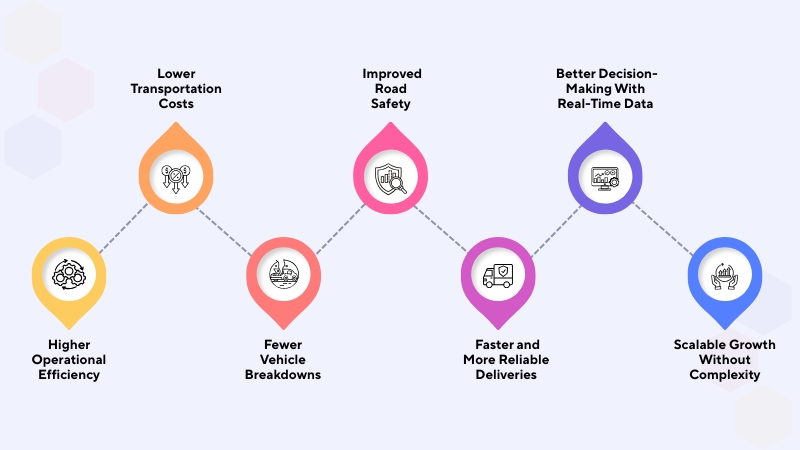
1. Higher Operational Efficiency: AI automates routing, scheduling, and decision-making, reducing manual effort. Businesses can handle more operations without increasing workload.
2. Lower Transportation Costs: Optimized routes and fuel usage help cut unnecessary expenses. Over time, even small improvements lead to significant cost savings.
3. Fewer Vehicle Breakdowns: Predictive maintenance detects issues before they become serious. This reduces downtime and keeps operations running smoothly.
4. Improved Road Safety: AI systems monitor driving patterns and detect potential risks early. This helps reduce accidents caused by human error.
5. Faster and More Reliable Deliveries: Real-time route adjustments ensure deliveries stay on schedule. Customers receive more consistent and predictable service.
6. Better Decision-Making With Real-Time Data: AI analyzes large volumes of data instantly for smarter decisions. Businesses no longer rely on guesswork or outdated information.
7. Scalable Growth Without Complexity: AI allows businesses to grow operations without adding chaos. Systems become more efficient as the business expands.
Challenges and Risks Come With Implementing AI in Transportation?
While AI in transportation offers clear advantages, adopting it is not always straightforward. Many businesses face practical challenges when trying to implement AI into existing systems.
Understanding these challenges helps entrepreneurs make better, more informed decisions.
1. High Initial Investment:
Implementing AI systems requires upfront investment in technology and infrastructure. For smaller businesses, this can feel like a significant financial commitment.
2. Data Dependency and Accuracy Issues:
AI systems rely heavily on data to function effectively. Poor-quality or incomplete data can lead to inaccurate predictions and decisions.
3. Integration With Existing Systems:
Many transportation companies still use legacy systems. Integrating AI with these systems can be complex and time-consuming.
4. Cybersecurity Risks:
As systems become more connected, they also become more vulnerable. AI-powered transportation networks must be protected from potential cyber threats.
5. Regulatory and Compliance Challenges:
Transportation is a highly regulated industry. Adopting AI requires businesses to navigate evolving legal and compliance frameworks.
6. Skill Gaps and Talent Shortage
Implementing AI requires technical expertise that many companies lack internally. Hiring or training the right talent can be a challenge.
Final Thoughts
Transportation is evolving faster than ever and businesses that rely on traditional systems are finding it harder to keep up. Rising costs, operational inefficiencies and increasing demand for faster deliveries are pushing companies to rethink how they manage mobility and logistics.
This is where AI in transportation is creating real opportunities. From smarter routing to predictive maintenance and data-driven decision-making, AI is helping businesses operate more efficiently and scale with confidence.
For companies looking to stay competitive, adopting intelligent solutions is no longer optional. It’s a strategic move.
Working with experienced technology partners like Softprodigy can help businesses design and implement AI-powered transportation systems tailored to their specific needs. With the right approach, companies can turn everyday operational challenges into long-term growth opportunities.