
What if your biggest growth challenge is how your software is being built? For many businesses, this is exactly the case.
They have a great idea and market. Additionally, on blueprints everything looks nice. The opportunity is real. Yet software releases keep slipping. Features take longer than expected. This leads to the accumulation of the technical debt.
Most in-house development teams are built to protect stability. That works until the business needs to move faster, scale suddenly or adapt to changing market demands. Hiring takes time. Upskilling takes longer. Momentum slows.
Meanwhile, competitors aren’t waiting. They’re shipping faster, experimenting more and reaching customers sooner.
That’s when leaders start asking the question that really matters: Is our development model enabling growth or quietly limiting it? For many, this is where the conversation around software development outsourcing begins. It is not a shortcut, but is a strategic shift.
Do you want to learn more about it? Let us walk you through it!
What Is Software Development Outsourcing and Why Is Everyone Talking About It?
Software development outsourcing is the practice of working with an external development team to design, build or scale software while the core business strategy stays in-house. But this definition alone does not explain why outsourcing has moved from being an operational choice to a boardroom discussion.
The real reason leaders are talking about software development outsourcing today is pressure.
Markets are moving faster. Customers expect frequent updates. Technologies are evolving faster than internal teams can adapt. At the same time, hiring senior engineers has become expensive, slow and highly competitive.
Outsourcing offers a different way forward.
- Access specialized skills without long hiring cycles
- Speed up product delivery
- Scale teams up or down based on demand
- Reduce operational risk during growth phases
According to Deloitte, over 70% of companies outsource software development to improve efficiency and focus on core business outcomes. This trend is no longer limited to startups. Enterprises like Slack, WhatsApp and GitHub used outsourced teams during critical growth phases.
The shift is not about replacing in-house talent. It is about extending your capabilities when timing and execution matter.

When Does Software Development Outsourcing Make Sense for a Company?
Outsourcing makes sense when growth demands speed, scale or specialization that your current setup cannot deliver in time.
One of the clearest signals is when your product roadmap keeps slipping, even though your team is working at full capacity. This usually means the issue is structure. Internal teams are designed to sustain systems, not to absorb sudden growth or experimentation.
Another common trigger is hiring friction. Senior engineers are expensive and scarce. According to industry hiring reports, filling a specialized software role can take three to six months. During that time, opportunities stall and competitors move ahead.
Outsourcing also becomes relevant when technology requirements shift. Cloud migration, AI integration, mobile scalability, or DevOps optimization demand experience that many teams only acquire after multiple real-world implementations. External teams bring that exposure immediately.
For startups, outsourcing often supports faster market entry without long-term payroll risk. For mid-sized and enterprise companies, it helps accelerate delivery while internal teams focus on architecture, governance, and business alignment.
What matters most is intent.
Companies that succeed with software development outsourcing use it to remove bottlenecks, not to offload responsibility. Leadership remains accountable for vision and outcomes. Execution becomes flexible.
What Are the Different Models of Software Development Outsourcing?
Not all outsourcing models solve the same problem. Many projects fail not because outsourcing does not work, but because the wrong model is chosen for the business reality. Therefore, understanding these models helps you decide how much control and speed you actually need.
Here are the different models of software development outsourcing:
1. What Is Offshore Software Development Outsourcing?
Offshore outsourcing means working with development teams located in a different country, often with a significant time zone difference.
Companies choose offshore teams when:
- Cost efficiency is important
- Projects require scale
- Development is long-term and structured
Countries like India and Eastern Europe are popular because they combine technical expertise with mature delivery processes. However, offshore outsourcing works best when communication frameworks, documentation, and ownership are clearly defined from day one.
2. How Is Nearshore Software Development Outsourcing Different?
Nearshore outsourcing involves teams located in nearby regions with overlapping or similar time zones.
This model is often chosen when:
- Real-time collaboration matters
- Frequent product discussions are required
- Cultural alignment is important
Nearshore teams offer a balance between cost control and collaboration ease, especially for agile and fast-moving products.
3. When Does Onshore Software Development Outsourcing Make Sense?
Onshore outsourcing means partnering with teams in the same country.
It is typically preferred when:
- Regulatory compliance is critical
- Data sensitivity is high
- Face-to-face collaboration is needed
While this model is more expensive, it reduces communication and compliance risks for specific industries like healthcare and finance.
What Is a Dedicated Development Team and Why Do Companies Prefer It?
A dedicated development team works exclusively on your product while remaining employed by the outsourcing partner.
This model is ideal when:
- You need long-term development support
- Product ownership must remain internal
- You want flexibility without hiring overhead
Dedicated teams behave like an extension of your in-house staff while offering the scalability that growing businesses need.
This is one of the most commonly adopted models by companies working with custom software development partners such as SoftProdigy.
How Do You Choose the Right Outsourcing Model for Your Business?
The right model depends on three questions:
- How fast do you need to move?
- How much control do you want?
- How predictable is your workload?
If speed and scale matter most, offshore or dedicated teams work well. However, if collaboration and proximity matter, nearshore or onshore models are safer. The best outcomes come from aligning the model with your growth stage, not industry trends.

What Are the Real Benefits of Software Development Outsourcing Beyond Cost Savings?
Cost savings may start the conversation, but business outcomes are what justify the decision. The real value of software development outsourcing becomes clear once delivery starts and pressure eases across teams.
1. Faster Time to Market for Software Products:
One of the strongest advantages of software development outsourcing is speed. Outsourced teams are production-ready. There is no waiting period for hiring, onboarding, or internal ramp-up. Development starts as soon as requirements are aligned.
Many SaaS and digital-first companies shorten release cycles by 30 to 40 percent by running parallel workflows. Internal teams focus on product decisions and architecture. Outsourced teams handle feature development and testing. This structure keeps momentum intact while protecting internal capacity.
2. Access to Skilled Software Developers Without Long Hiring Cycles:
Hiring experienced developers is time-consuming and expensive. According to industry hiring benchmarks, filling a senior engineering role can take several months.
Outsourcing removes this bottleneck. Companies gain immediate access to developers with hands-on experience in cloud platforms, AI integration, mobile scalability, and enterprise systems. These are skills that usually take years to build internally.
This is why businesses working with enterprise software development partners often see faster adoption of best practices.
3. Improved Software Quality and Development Consistency:
Quality improves when teams are not stretched thin. Outsourced development teams typically operate with established QA processes, automated testing frameworks, and structured documentation. Their delivery reputation depends on consistency, not speed alone.
Research from Capgemini shows organizations using structured outsourcing models experience fewer post-release defects compared to teams operating under constant delivery pressure.
When quality assurance runs in parallel with development, bugs are caught earlier, rework reduces, and releases become more predictable.
4. Scalable Development Teams Without Long-Term Risk:
Outsourcing provides flexibility that in-house teams cannot easily match. Development capacity can increase during launches or major feature updates and scale down once priorities shift.
This allows businesses to respond to market demands without long-term payroll commitments or internal restructuring. Many growing companies use outsourcing to stay lean while still supporting aggressive roadmaps.
For teams that need controlled scaling, models like hire developers on demand are often preferred.
5. Better Focus on Core Business and Product Strategy:
This benefit is less visible, but often the most valuable.
When execution becomes predictable, leadership focus shifts. Instead of managing delivery risks, leaders spend time on customer experience, product vision, and market expansion.
Outsourcing creates operational breathing room. That space enables better decisions and long-term growth.
This is why companies like Slack and WhatsApp combined internal leadership with outsourced execution during critical growth phases.
What Are the Risks of Software Development Outsourcing and How Can You Avoid Them?
Software development outsourcing fails when risks are ignored, underestimated, or discovered too late. However, the good news is that most outsourcing risks are predictable and preventable when addressed early.
Below are the risks leaders worry about most and how successful companies mitigate them.
1. Communication Gaps and Misaligned Expectations:
Poor communication is the most cited reason outsourcing projects stall. This usually happens when requirements are vague, ownership is unclear, or updates are inconsistent. Time zone differences amplify the problem if expectations are not structured.
How to avoid it?
- Define clear documentation before development begins
- Set fixed communication rituals such as sprint reviews and weekly check-ins
- Assign a single point of contact on both sides
Outsourcing works best when communication is intentional, not reactive.
2. Loss of Control Over Product Direction
Many leaders fear losing visibility or control once development moves outside. This happens when decision-making authority is delegated along with execution.
How to avoid it
- Keep product ownership, architecture decisions, and roadmap planning internal
- Treat outsourced teams as execution partners, not decision-makers
- Use transparent project management tools for real-time visibility
Companies that retain strategic control rarely feel disconnected from outsourced work.
3. Inconsistent Code Quality and Technical Debt
Quality issues often surface when testing is rushed or bundled into final release cycles. This risk increases when QA is treated as a secondary task rather than a parallel process.
How to avoid it
- Separate development and testing responsibilities
- Use independent QA services for continuous validation
- Implement automated testing, regression checks, and performance testing early
Organizations that integrate professional quality assurance services experience fewer post-release defects and smoother deployments. Quality is protected by process, not promises.
4. Data Security and Intellectual Property Risks
Security concerns are valid, especially for products handling sensitive data. The risk increases when vendors lack compliance frameworks or secure development practices. Security should be built into development workflows, not added later.
How to avoid it
- Work with partners following secure coding standards
- Use clear IP ownership clauses in contracts
- Limit data access based on roles and responsibilities
5. Choosing the Wrong Outsourcing Partner
Even the best outsourcing model fails with the wrong partner. Red flags include vague timelines, lack of domain understanding, and poor transparency. Reviewing real delivery experience and long-term client relationships reduces this risk significantly.
How to avoid it
- Evaluate past projects, not just portfolios
- Assess communication quality before signing contracts
- Look for partners who ask business questions, not just technical ones

How Much Does Software Development Outsourcing Cost and What Should You Really Budget For?
Cost is usually the question that brings leaders to outsourcing. But it should never be the question that drives the decision alone.
Software development outsourcing costs vary widely because pricing depends on how, where, and what you are building. Understanding these variables upfront prevents budget overruns and unrealistic expectations later.
Software Development Outsourcing Cost by Region
Geography plays a role, but it is not the whole story.
On average:
- Offshore development teams in regions like India or Eastern Europe range between $20 to $50 per hour
- Nearshore teams typically range between $40 to $80 per hour
- Onshore development teams often exceed $100 per hour
Lower rates can reduce initial spend, but long-term value depends on delivery quality, communication efficiency, and rework reduction.
This is why many companies choose partners who balance cost with maturity, rather than chasing the lowest bid.
Factors That Influence Software Outsourcing Costs
Hourly rates are only one part of the equation.
Your final budget is shaped by:
- Project complexity and scope clarity
- Technology stack and integrations
- Team composition including developers, QA, and DevOps
- Engagement model such as fixed price, time and material, or dedicated team
- Level of quality assurance and testing required
For example, projects that include product engineering services may appear more expensive initially, but they significantly reduce post-release fixes and rework.
Why Cheapest Software Development Outsourcing Often Costs More Later?
Many outsourcing failures trace back to unrealistic pricing expectations.
Low-cost engagements often compromise on:
- Testing depth
- Documentation quality
- Security practices
- Communication consistency
These gaps surface later as delays, rework, and technical debt.
According to IBM, fixing defects after deployment can cost up to 15 times more than addressing them during development. Budgeting correctly from the start protects both timelines and outcomes.
How to Build a Realistic Software Development Outsourcing Budget?
A reliable outsourcing budget focuses on outcomes, not just hours.
Strong budgeting includes:
- Clear scope definition and success metrics
- Allocation for QA, testing, and reviews
- Buffer for iteration and improvement
- Transparent milestone-based payments
Many companies work with custom software development partners to scope projects realistically before committing to delivery timelines. This approach allows leaders to make informed decisions rather than reactive adjustments.
What Decision Makers Should Compare Beyond Cost?
Before finalizing an outsourcing partner, compare:
- Delivery consistency
- Communication quality
- Testing and QA depth
- Scalability options
- Post-launch support
Cost should be evaluated alongside risk reduction and long-term stability. Outsourcing works best when budgeting supports sustainable execution, not short-term savings.
How to Choose the Right Software Development Outsourcing Partner?
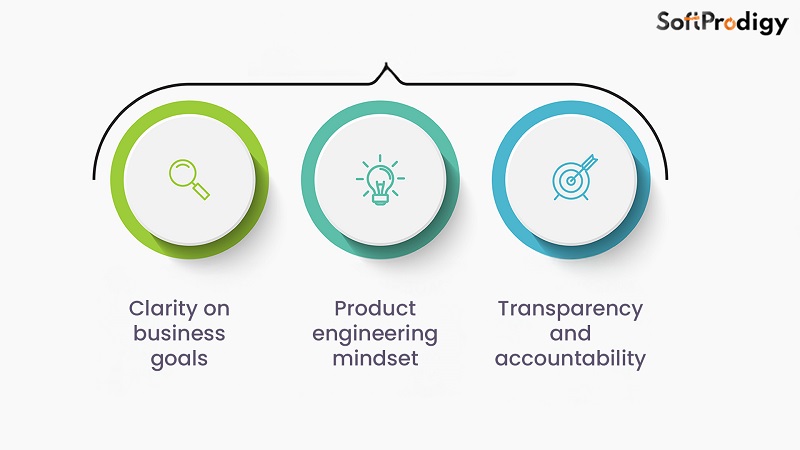
Choosing a software development outsourcing partner is not about finding the biggest team or the lowest price. It is about finding a partner who can support your product vision, execution speed, and long-term growth.
Below are the key criteria decision-makers should evaluate before moving forward:
1. Clarity on business goals: A strong software development outsourcing partner takes time to understand your product vision and growth plans. This clarity ensures development decisions support business outcomes, not just feature delivery, and reduces the risk of misalignment later.
2. Product engineering mindset: The right partner brings product engineering services into the engagement, thinking beyond code to include architecture, scalability, performance, and long-term stability. This approach helps prevent technical debt and supports smoother product evolution as requirements grow.
3. Transparency and accountability: Reliable partners maintain clear communication, defined ownership, and predictable delivery cycles. Regular updates, visible progress tracking, and structured reviews give decision-makers confidence and control throughout the development process.

Software Development Outsourcing vs In-House Development
| Factor | In-House Development | Software Development Outsourcing |
|---|---|---|
| Speed and execution | Limited by hiring timelines, internal approvals, and fixed capacity | Faster execution with ready-to-deploy teams and flexible scaling |
| Cost structure | High fixed costs including salaries, benefits, infrastructure, and training | Variable cost model with predictable budgeting tied to delivery |
| Access to expertise | Restricted to existing team skills unless new hires are made | Immediate access to specialized skills like cloud, AI, mobile, and security |
| Scalability | Scaling requires recruitment and restructuring, which slows momentum | Teams can scale up or down without operational disruption |
| Control and ownership | Full internal control over decisions and execution | Strategic control remains internal while execution is handled externally |
| Risk management | Risks concentrated internally if resources are stretched | Risks distributed when managed with the right partner and processes |
| Best suited for | Stable products with predictable workloads | Growing products, tight timelines, and evolving requirements |
The Future of Software Development Outsourcing
Software development outsourcing is no longer evolving around cost. It is evolving around capability, speed and resilience.
As products become more complex and markets move faster, companies are rethinking how development teams are built and managed. One clear shift is toward hybrid development models. Businesses are keeping product leadership, architecture and strategy in-house while outsourcing execution-heavy work to external teams. This balance gives companies control without slowing delivery.
Another major change is the rise of product engineering-led outsourcing. Instead of hiring teams to just write code, companies are choosing partners who take ownership of the entire product lifecycle. This includes architecture decisions, performance optimization, testing, scalability planning, and long-term maintenance. This approach reduces technical debt and improves product stability as systems grow.
AI and automation are also shaping how outsourced teams work. From AI-assisted development and automated testing to smarter DevOps pipelines, outsourcing partners are using technology to increase productivity without increasing headcount. Gartner predicts that distributed and AI-supported development teams will become the standard operating model for software delivery over the next few years.
Security and compliance are gaining more importance as well. Future-ready outsourcing partners are embedding security practices directly into development workflows rather than treating them as final-stage checks. This shift is especially critical for products operating in regulated industries.
The biggest takeaway for decision-makers is this. Outsourcing is no longer about handing work outside. It is about building adaptable development ecosystems that can grow, shrink, and evolve with business needs. Companies that treat outsourcing as a long-term capability strategy rather than a short-term fix are the ones seeing sustained results.
Final Thoughts,
Software development outsourcing is not a yes-or-no decision. It is a timing and alignment decision.
The companies that benefit most from outsourcing are not the ones trying to move work outside. They are the ones trying to move faster without losing control, scale without overhiring and build products that can evolve without constant rework.
Throughout this guide, one pattern remains clear. Outsourcing works when it is treated as a strategic extension of your team, not a transactional handoff. The right model, the right partner, and the right expectations make the difference between momentum and frustration.
If you are evaluating software development outsourcing and want clarity before committing, talk to a team that focuses on outcomes, not just delivery. SoftProdigy helps businesses choose the right model, scope realistically and execute with confidence.